From Gibraltar to Turkey in Three Months: The True Mediterranean Voyage
Three months allow the Mediterranean to become a complete sailing season. The purpose is no longer simply to move the yacht from Gibraltar to Turkey or to accumulate miles and ports. There is time to explore the coastlines, wait for suitable weather, remain at anchor for several days and change the route out of simple curiosity.
The itinerary could include:
Gibraltar – Andalusian coast – Cartagena – Balearic Islands – Corsica – Sardinia – Sicily – Malta – Ionian Sea – Peloponnese – Saronic Gulf – Cyclades – Dodecanese – Rhodes – Marmaris – Göcek – Fethiye
The total distance may reach 2,500 to 2,900 nautical miles, depending on the diversions made and the islands visited. Spread over approximately 90 days, the voyage will allow most sailing legs to remain between 25 and 60 nautical miles, although several overnight passages will still be necessary.
The first two weeks can be spent between Gibraltar, Málaga, Almerimar, Cabo de Gata and Cartagena. This initial stage allows the crew to settle gradually into the rhythm of the voyage, test every onboard system and adapt to the heat and Mediterranean sailing conditions.
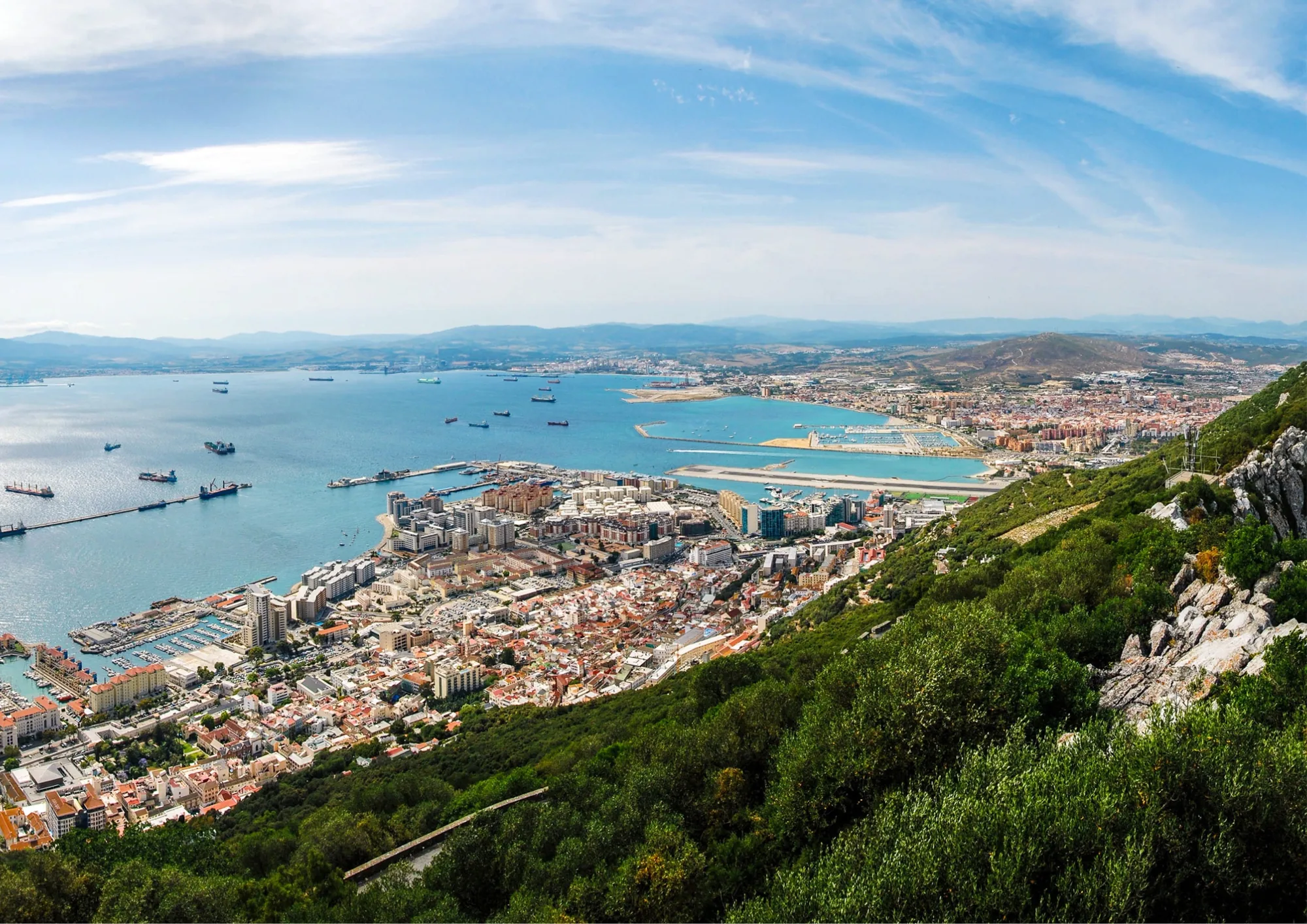
The passage through the Strait of Gibraltar must be planned with close attention to the current, tide, wind and intense commercial traffic. AIS, VHF and a permanent lookout are essential. A strong easterly Levante may justify postponing the departure, because beginning a three-month voyage by fighting the sea proves very little, apart from a certain degree of impatience.
The third and fourth weeks can be dedicated to the Balearic Islands. Ibiza and Formentera offer extraordinary anchorages, while Majorca and Menorca combine beaches, historic towns and well-protected harbours. With two weeks available, there is no need to arrive at an island in the morning and leave again that afternoon simply to remain on schedule.
The fifth week can be reserved for the crossing to Corsica. The island’s western coast offers mountains, cliffs and deep anchorages that are entirely different from the landscapes of the Balearics. Entering Bonifacio between its limestone cliffs is one of the most impressive moments of any voyage through the western Mediterranean.
During the sixth week, the yacht can cross the Strait of Bonifacio and explore northern Sardinia, including the La Maddalena Archipelago. The following week, the voyage can continue along either the eastern or western coast of the island towards Cagliari and Villasimius. The decision will depend on the weather and, above all, the Mistral, which can make certain areas particularly uncomfortable.
The eighth week can be devoted to Sicily and the Aeolian Islands. The route may begin at the Aegadian Islands, continue through Trapani and Palermo, and then proceed to Vulcano, Lipari and Stromboli. Sicily combines history, volcanoes, excellent food and harbours with personalities of their own, four persuasive reasons not to rush past the island.
After passing through the Strait of Messina, the route continues towards Syracuse. The ninth week may include an extension to Malta. This stop is optional and adds distance, but it provides an opportunity to visit Valletta and experience one of the Mediterranean’s most important maritime traditions.
The crossing to the Ionian Sea begins during the tenth week. Corfu, Paxos, Lefkada, Meganisi, Ithaca and Kefalonia are ideal for slower cruising. Distances are short, anchorages are plentiful, and the summer winds tend to follow a relatively predictable daily pattern.
The eleventh week can be dedicated to the Peloponnese, Monemvasia and the Saronic Gulf. Hydra, Poros and Aegina may be visited before rounding Cape Sounion and entering the Aegean Sea.
During the twelfth week, the route crosses the Cyclades and the Dodecanese. This is precisely where the flexibility provided by a three-month schedule becomes most valuable. The Meltemi can blow for several consecutive days, particularly during July and August, forcing the yacht to remain in harbour or follow a more sheltered route.
Milos, Paros, Naxos, Amorgos, Astypalaia, Kos and Rhodes are natural possibilities, but the itinerary should not be excessively rigid. In the Aegean, it is prudent to plan only the next two or three days and adapt the remainder of the voyage to the weather forecast.
The thirteenth and final week can be spent between Rhodes, Marmaris, Göcek and Fethiye. The Lycian coast offers deep bays, ruins beside the sea, clear water and mountains that appear to descend directly to the shore. After almost three months of sailing, it is a fitting conclusion to the voyage.
Before departure, the yacht should undergo a thorough inspection. The rigging, autopilot, engine, electrical system, refrigeration, anchor windlass, bilge pumps, tender and safety equipment will all be used intensively. A reliable anchor, sufficient chain and the ability to moor using lines ashore will be particularly important.
The yacht’s registration documents, insurance, certificates, radio licences and crew documentation must also be prepared. The formalities applicable in Greece and Turkey should be checked in advance, including the Greek TEPAI cruising tax, the Turkish Transit Log and the Schengen rules governing crew members who are not citizens of the European Union.
After three months, there is no longer just one Mediterranean. There is the Strait of Gibraltar and the Andalusian coast, the Balearic Islands, Corsica and Sardinia, volcanic Sicily, the peaceful Ionian Sea, the Aegean ruled by the Meltemi and, finally, the Turkish coast.
The problem is that, even after three months, there will still be dozens of islands left to discover and hundreds of coves where you have never dropped anchor. That is probably the greatest danger of this voyage: reaching Turkey and realising that returning home quickly no longer makes any sense.