Need for Speed
To sail around the world has always been one of humanity’s great obsessions. For centuries it was about survival, discovery and trade. Later it became about adventure and endurance. In the last decades it has turned into something even more radical. A pure race against time, the elements and the limits of technology. The quest to circle the planet by sail faster than anyone has done before is one of the most brutal and fascinating challenges ever created in sport.
The modern history of speed records around the world truly crystallised with the creation of the Jules Verne Trophy in 1993. The idea was deceptively simple. Sail non-stop around the world following the classic clipper route round the three great capes: Cape of Good Hope, Cape Leeuwin and Cape Horn. No handicaps, no classes, no limits other than wind, water and courage. The only rule was to beat the existing time.
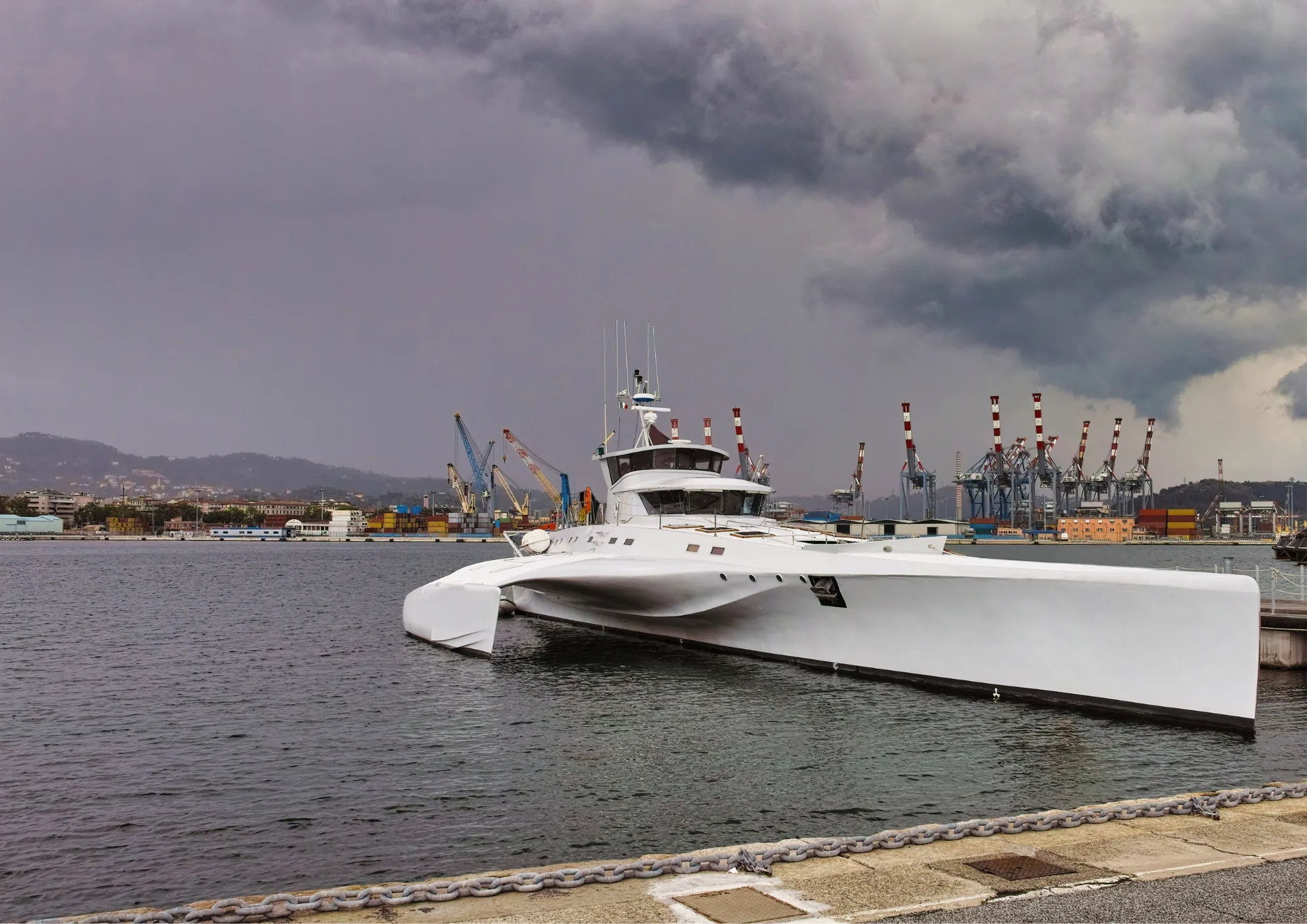
From the very beginning this was not a race for ordinary boats. It was a playground for radical multihulls, huge trimarans built almost like aircraft rather than ships. Carbon fibre replaced wood and steel. Rigging became lighter than air. Speeds once unthinkable became routine. Sustained averages of over 30 knots across entire oceans stopped being science fiction and started being logged data.
Early attempts were heroic but fragile. Boats broke, crews froze, systems failed. The Southern Ocean showed no mercy. Waves like moving buildings, ice-cold water and winds that never seemed to sleep. Many attempts ended not with celebrations but with quiet returns to port and long post mortems in boatyards. And yet every failure fed the next design, the next strategy, the next obsession.
Another name impossible to ignore is Ellen MacArthur. Although best known for her solo records her impact on ocean speed culture is immense. She changed the public perception of what was possible at sea and proved that mental resilience can be as important as raw speed. Her record breaking voyage around the world captivated millions and pulled offshore sailing into mainstream consciousness.
Then came the era of giant corporate-backed machines. Banque Populaire V under the command of Loïck Peyron pushed the record into territory that had previously belonged to fantasy. Less than 46 days around the planet. Entire oceans crossed in under a week. Time zones erased at terrifying speed. The planet suddenly felt smaller and far more hostile.
Francis Joyon later proved that experience, humility and relentless seamanship could defeat bigger budgets. When he set the record aboard IDEC Sport he showed that perfection is often about consistency rather than bravado. His circumnavigation was not just fast; it was calm, precise, almost surgical in execution.
What makes these attempts so compelling is that they are not just about sailing fast. They are about managing risk at absurd speeds in the most remote places on Earth.
One broken foil, one damaged rudder, one wrong weather decision can end everything in seconds. Sleep deprivation becomes normal. Crews operate in permanent semi-exhaustion reading clouds, radar and numbers while the boat literally flies across wave tops.
There is also a philosophical element to these records. Unlike classic regattas, there is no opponent in sight. The real enemy is an invisible clock and the memory of those who came before. Every skipper knows the split times. Every hour lost or gained echoes with the ghosts of previous attempts. It is sailing stripped to its essence: speed, decision and consequence.
Today the challenge continues. Boats are even faster foiling almost permanently above the water. Routing software is terrifyingly precise. Satellites watch every mile. And yet the ocean remains untamed. Records fall not because the sea becomes kinder but because sailors learn to dance closer to its edge without falling.
These round the world speed records matter because they represent the sharp edge of human ambition at sea. They remind us that even in a world of instant communication and mapped oceans there are still frontiers defined by courage, skill and timing. They are not just about winning. They are about daring to ask how fast a human being can really sail around the world and live to tell the story.
And the answer keeps changing.