
Why Traditional Navigation Skills Still Matter
Modern sailors live in an age of extraordinary tools.
GPS, chartplotters, navigation apps, satellite communications, weather routing software and artificial intelligence have made sailing safer, easier and more accessible than ever before. Used properly, these tools are powerful allies. They help us plan passages, avoid danger, monitor weather, check our position and make better decisions at sea.
But they are not a substitute for knowledge.
Every sailor should understand at least the theory and practice of traditional chart navigation. This means knowing how to read a paper chart, plot a position, calculate course and distance, understand variation and deviation, estimate speed over time, work with dead reckoning and maintain a proper log. These are not old-fashioned skills kept alive for nostalgic sailors in wool jumpers. They are the basic grammar of seamanship.
A sailor who can navigate on paper understands what the electronic screen is actually doing. They can question it. They can recognise when something looks wrong. They can compare the expected position with the real one. That ability matters, because blindly trusting a screen is not navigation. It is obedience.
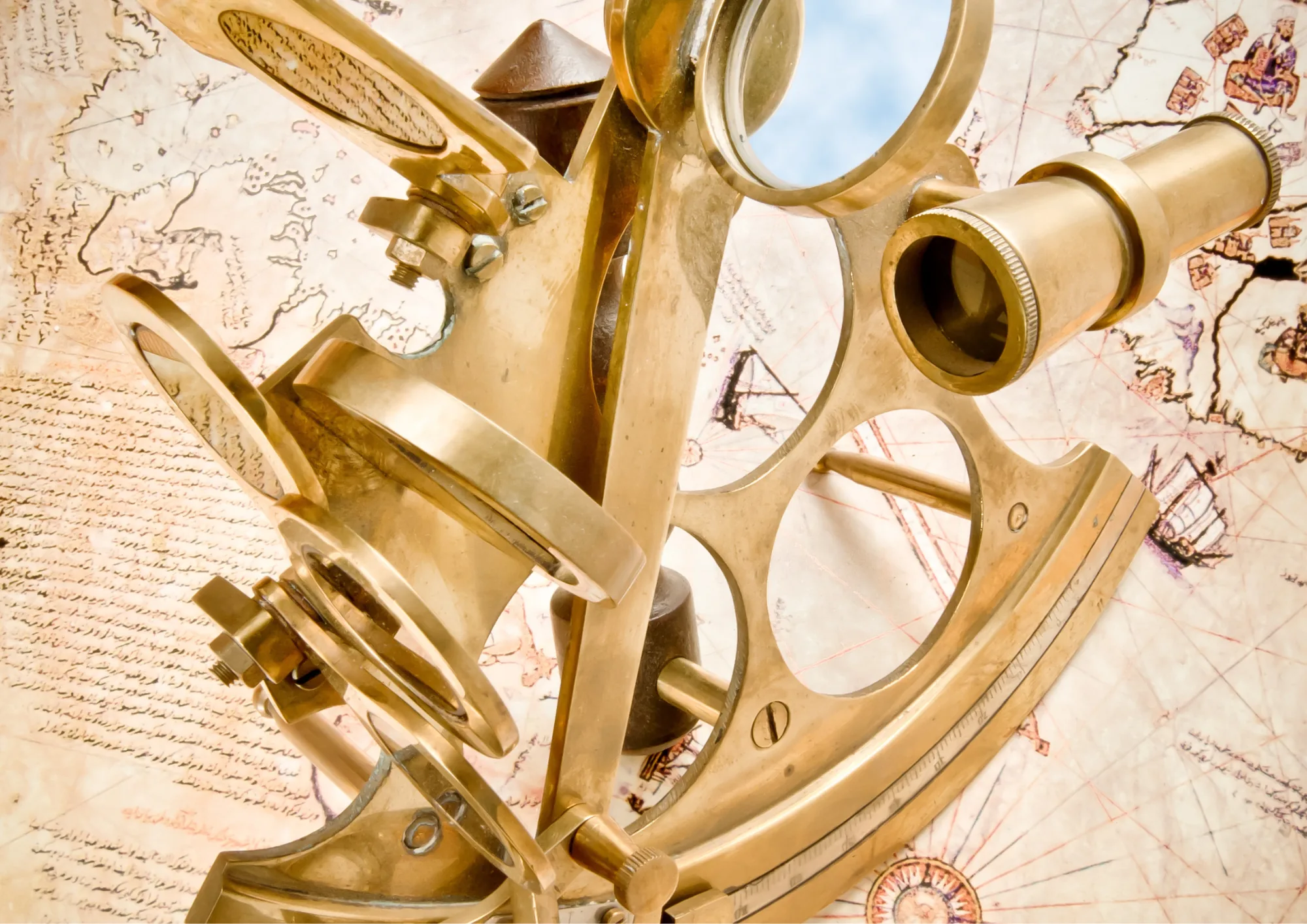
Celestial navigation also deserves respect. Not every crew member needs to become an expert with a sextant, but every serious sailor should understand the principle behind it. For centuries, vessels crossed oceans using the sun, the stars, the horizon, time and calculation. In a world where electronics can fail, that knowledge is not romantic decoration. It is resilience.
We live in a time where people increasingly confuse access to information with understanding. Because GPS works, we assume position is always available. Because an app draws a route, we assume navigation has been done. Because artificial intelligence can explain a problem, we assume we no longer need to learn the foundations ourselves.
That is a dangerous illusion.
The world is not as stable as we would like it to be. Open conflicts, cyber attacks, electronic interference, infrastructure failures and political instability all remind us that modern systems are fragile. GPS can be jammed or spoofed. Signals can be degraded. Devices can break. Batteries can die. Software can fail. Electricity can disappear at exactly the wrong moment.
When that happens, the sea does not become safer because the technology has stopped working.
The boat still needs a position.
The crew still needs a course.
The skipper still needs to make decisions.
Offshore, knowledge is not a luxury. It is part of the safety equipment. A paper chart, a compass, a watch, a logbook and a trained mind can still keep a boat moving in the right direction when the screens go dark. They may not be as convenient as modern electronics, but convenience is not the same as security.
At Sailink.org, we believe modern sailing should embrace technology without becoming dependent on it. The best sailors are not anti-technology. They use every good tool available. But they also know what lies beneath the tool. They understand the principles. They practise the basics. They prepare for failure before failure arrives.
Learn the chart.
Understand the compass.
Keep a log.
Practise dead reckoning.
Respect celestial navigation.
Use GPS, apps and artificial intelligence, but do not surrender your seamanship to them.
Because offshore, the most important instrument on board is still not electronic.
It is a trained mind.